If you’ve searched for “clean coder pdf,” you probably want the book’s core lessons that turn competent programmers into true professionals. A quick, pirated download may seem tempting, but it undermines the very professionalism the book teaches and introduces real risk. This article explains legal ways to get The Clean Coder and practical ways to apply its disciplines—ownership, integrity, TDD, honest estimates, and teamwork—in modern stacks like TypeScript and React.
November 16, 2025 (11mo ago) — last updated September 19, 2026 (1mo ago)
The Clean Coder: Developer Professionalism
Learn legal ways to get The Clean Coder and apply its principles—TDD, honest estimates, ownership, and teamwork—to modern stacks like TypeScript and React.
← Back to blog
The Clean Coder: Developer Professionalism
Summary: Learn legal ways to get The Clean Coder and apply its principles—professionalism, discipline, TDD, honest estimates, and teamwork—to modern software development.
Introduction
If you’ve searched for “clean coder pdf,” you probably want the book’s core lessons that turn competent programmers into true professionals. A quick, pirated download may seem tempting, but it undermines the very professionalism the book teaches and introduces real risk. This article explains how to get The Clean Coder legally, why that matters, and how to apply its disciplines—ownership, integrity, test-driven development, clear estimates, and teamwork—in modern stacks like TypeScript and React.
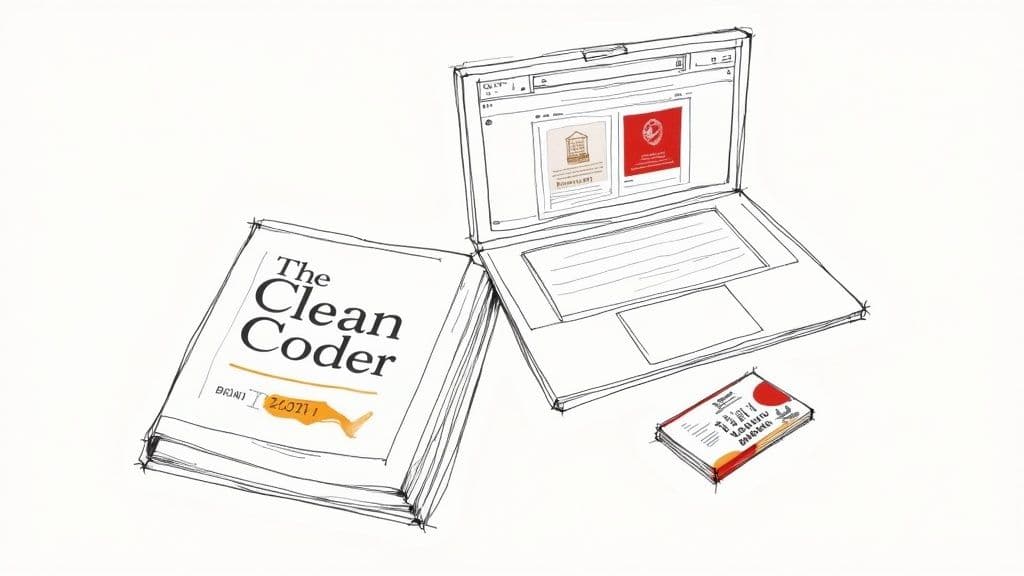
Why you should skip shady PDFs
The core message of The Clean Coder is to behave like a professional: take responsibility, communicate clearly, and act with integrity. Hunting for a pirated PDF is, in a way, your first test—do you cut corners, or do you do the right thing?
Beyond ethics, pirated files often carry malware, are poorly formatted, or omit content, creating more problems than the “free” download solves 1. Buying or borrowing a legitimate copy ensures you receive the full, uncorrupted work of Robert C. Martin (Uncle Bob) and supports the author whose ideas you want to learn.
Where to legally access The Clean Coder
Getting a legal copy is straightforward and preserves quality while supporting the author and publisher.
| Method | Why it’s safe | How it supports the author |
|---|---|---|
| Buy the official eBook or physical copy | Instant, complete, virus-free access from major booksellers | Directly — purchases support the author and publisher |
| Check your local library | Free and legal; many libraries offer digital loans through Libby/OverDrive 2 | Indirectly — libraries license copies and borrowing shows demand |
| Use an online book subscription | Access a large library for a monthly fee; authors are compensated based on readership | Indirectly — platforms compensate authors when books are read |
Choosing a legal source ensures you get the knowledge, avoid risks, and act in line with the professionalism the book teaches.
“The only way to go fast is to go well.” — Robert C. Martin
This idea applies to how we acquire knowledge as much as to how we write code. At Clean Code Guy, we apply the same principles building products like lifepurposeapp.com and fluidwave.com, because professional practices lead to dependable software.
What it means to be a professional coder
Searching for a “clean coder pdf” is one thing; internalizing the book’s mindset is another. Being a professional developer is more than producing code that works. It’s a broader shift in responsibility, communication, and continuous improvement.
Think of a skilled surgeon: they’re accountable for outcomes, communicate clearly with colleagues, and practise their craft relentlessly. That’s the benchmark the book sets for developers: combine technical skill with accountability and quality.
Ownership and accountability
A professional takes ownership of the entire lifecycle of their code—from functionality and readability to long-term impact on the business. When bugs appear, professionals don’t point fingers; they diagnose, fix, and add tests to prevent regressions. That approach builds trust and moves you from coder to software craftsperson.
“The only way to go fast is to go well.”
Shortcuts feel fast but create long-term slowdowns. Clean, professional work sustains team velocity and reliability, as demonstrated by projects like microestimates.com.
Integrity in communication
Professionalism includes how you communicate. Give honest estimates, speak up when deadlines are unrealistic, and raise issues early so there’s time to find solutions. This upfront transparency is the foundation of an effective engineering culture.
Disciplined, future-focused strategies produced significant gains in California’s clean energy sector, where growth outpaced the broader economy 4.
Core disciplines of software craftsmanship
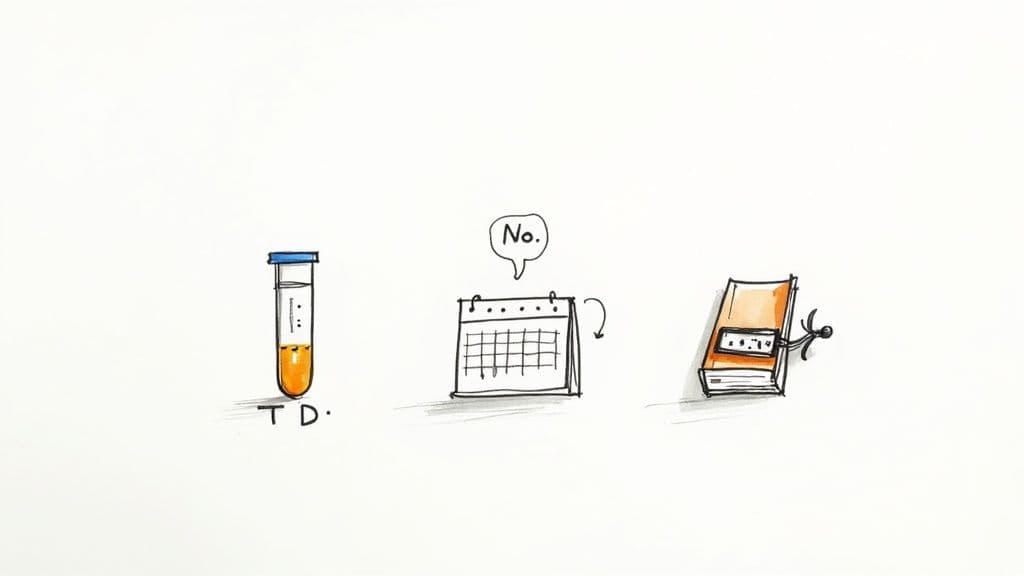
Living professionalism daily requires discipline. Robert C. Martin lays out essential habits that guarantee quality and long-term maintainability.
One of the toughest disciplines is learning to say “No.” A true professional won’t promise a deadline they know is impossible. Saying “Yes” without the work to back it up leads to stress, corner-cutting, and burnout. Conversely, a professional “Yes” means you’ve done the homework, understand the work, and can deliver reliably.
Mandating quality with Test-Driven Development
Uncle Bob treats Test-Driven Development (TDD) as a core discipline. The Red-Green-Refactor cycle—write a failing test, make it pass, then improve—ensures production code is born with tests.
The benefits are real: fewer regressions, simpler designs, and a living test suite that serves as executable documentation. Systematic reviews indicate that TDD can improve design quality and reduce defects in many contexts 3. For practical guidance, see our guide on clean coding principles. We used TDD to build resilient projects like lifepurposeapp.com.
The discipline of practice
Craftsmanship requires practice outside the pressure of deadlines. Coding katas—short, focused exercises—sharpen fundamentals like a musician practising scales. Regular practice makes clean patterns second nature, so you can produce high-quality work under deadline pressure.
Time management is also a discipline. Protect blocks for deep work, reduce distractions, and create a daily structure that supports focus. This kind of attention fuels complex engineering work such as fluidwave.com.
By mastering these disciplines, you move from someone who simply writes code to a respected professional with long-term impact.
Mastering estimates and handling pressure
Estimation forces a collision between technical work and business expectations. The Clean Coder treats estimation as a professional skill, not mystical guesswork. The key distinction is between an estimate and a commitment: an estimate is a forecast, while a commitment is a promise.
Communicating uncertainty with three-point estimates
Uncle Bob advocates three-point estimates (Optimistic, Nominal, Pessimistic) so stakeholders get a realistic range rather than a single misleading number. Presenting these three values shifts the conversation from “When will you be done?” to “Here’s the spectrum of outcomes.” We built microestimates.com to help teams practise honest forecasting.
The professional way to say “No”
When asked to commit to an unrealistic date, a professional analyzes the request, provides a three-point estimate, and explains trade-offs. The goal is to collaborate on a realistic plan—negotiate scope, state risks, or propose alternatives. That approach protects the team, the product, and your reputation.
Building strong teams through collaboration
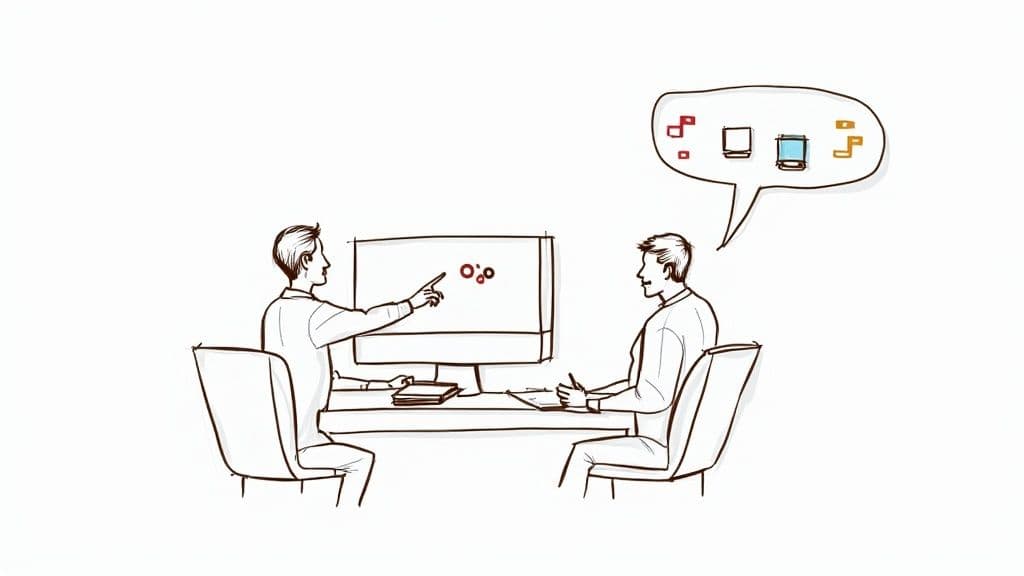
A recurring lesson in The Clean Coder is that software development is a team sport. Professionals don’t work in a silo; they communicate, respect peers, and share ownership. Team interactions directly influence the quality of shipped software.
Constructive code reviews
Code reviews should focus on principles, not personal preferences. Ask objective questions like, “Could we refactor this to follow the Single Responsibility Principle?” That keeps feedback constructive and fosters shared standards.
The power of pair programming and mentorship
Pair programming accelerates knowledge transfer, reduces defects, and encourages better design thinking. Mentorship creates a virtuous cycle: professionals seek mentors and pay it forward, raising the team’s collective skill.
Disciplined, coordinated efforts produce outsized results—an analogy for engineering practices that lift entire teams 4.
Applying these principles in modern development
The Clean Coder’s lessons are timeless and apply across modern stacks. Practices like TDD fit well into component-driven development with React and TypeScript, promoting robust UIs and safer refactors.
Estimation and communication remain critical, so replace opaque story points with honest forecasts and clear trade-offs. These disciplines are the foundation of maintainable, scalable products, which we’ve applied to lifepurposeapp.com and fluidwave.com.
A professional developer understands that responsibility isn’t just delivering a feature today, but ensuring the codebase remains healthy enough for others to build on tomorrow.
Whether maintaining a legacy system or starting anew, these principles give teams a shared language and standards for consistently delivering value.
Common questions about The Clean Coder
What’s the difference between Clean Code and The Clean Coder?
Clean Code is a hands-on manual about writing maintainable code. The Clean Coder is about the person writing the code—the mindset, ethics, and professional disciplines that make sustained craftsmanship possible.
Is The Clean Coder still relevant today?
Yes. The book’s emphasis on responsibility, clear communication, and disciplined practice stands regardless of language or framework.
How can a junior developer start applying these principles?
Start small: pick one discipline—try TDD on a side project, give three-point estimates on a ticket, or begin doing short katas. Build habits gradually until they become second nature.
Concise Q&A
Q: Is it okay to download a free PDF of The Clean Coder?
A: No. Pirated copies risk malware and missing content; get a legal copy via purchase, library loan, or subscription to respect the author and ensure quality 1.
Q: Will TDD slow me down?
A: Initially it may feel slower, but TDD reduces regressions and improves design, which accelerates long-term delivery and reduces rework 3.
Q: How do I give realistic timelines?
A: Use three-point estimates (Optimistic, Nominal, Pessimistic), communicate uncertainties, and negotiate scope or risks when asked for commitments.
1.
Malware and risks of pirated content: https://blog.malwarebytes.com/threats/piracy/
2.
Library digital lending and Libby/OverDrive: https://www.overdrive.com/apps/libby/
3.
On TDD and quality: See systematic reviews and studies on TDD effectiveness (IEEE): https://ieeexplore.ieee.org/document/7004937
4.
California clean energy and job growth: https://e2.org/reports/clean-jobs-california/ and state energy analysis: https://www.eia.gov/state/analysis.php?sid=CA
🙋🏻♂️
AI writes code.You make it last.
In the age of AI acceleration, clean code isn’t just good practice — it’s the difference between systems that scale and codebases that collapse under their own weight.