Adopting the Clean Coder mindset shifts your focus from merely producing code to owning the quality, reliability, and long-term health of the systems you build. This guide explains who Robert C. “Uncle Bob” Martin is, the difference between Clean Code and The Clean Coder, and practical habits teams can adopt to reduce defects and improve delivery.
December 12, 2025 (9mo ago) — last updated April 27, 2026 (4mo ago)
Uncle Bob Clean Coder: Developer Mindset
Adopt Uncle Bob’s Clean Coder mindset to boost professionalism, reduce defects, and improve delivery with practical habits and team practices.
← Back to blog
Clean Coder Mindset for Professional Developers
Summary: Adopt the Uncle Bob Clean Coder mindset to transform your career. Learn the difference between code and professionalism with real-world examples.
Introduction
Adopting the Clean Coder mindset shifts your focus from merely producing code to owning the quality, reliability, and long-term health of the systems you build. This guide explains who Robert C. “Uncle Bob” Martin is, the difference between Clean Code and The Clean Coder, and practical habits teams can adopt to reduce defects and improve delivery.
When developers talk about the Uncle Bob Clean Coder mindset, they mean professionalism, discipline, and pride in craftsmanship. Robert C. Martin has promoted practices and principles that shape how teams design, test, and own software—and why that matters to users and businesses.1
Who Is Uncle Bob and Why It Matters
Robert C. “Uncle Bob” Martin is a longtime software engineer, author, and teacher whose work has influenced modern software practices.1 He championed habits, ethics, and design principles that help teams deliver dependable software and act like professionals in the process.
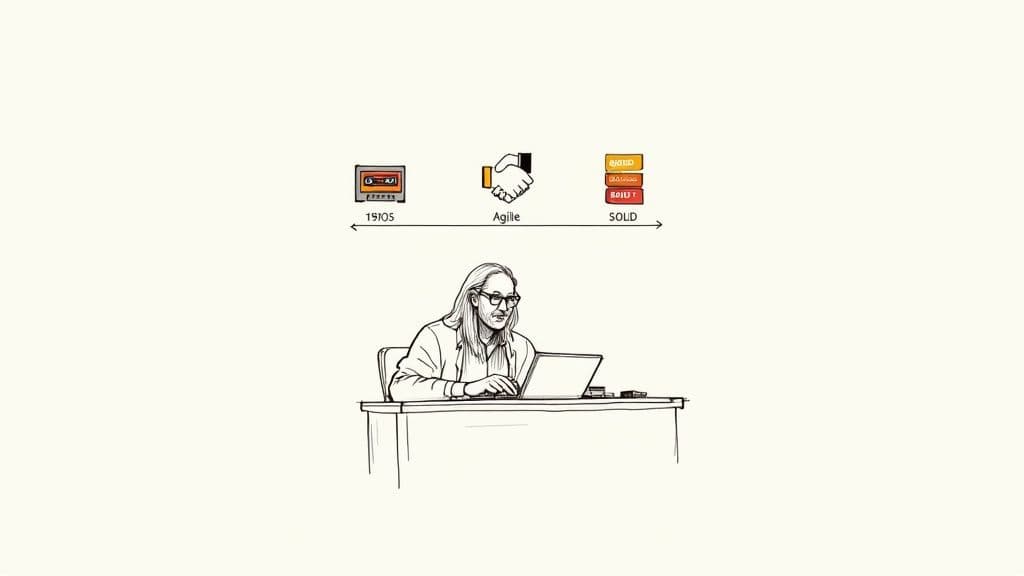
From the Agile Manifesto to SOLID Principles
Uncle Bob was an early signatory of the Agile Manifesto, which reoriented software development around people, collaboration, and iterative delivery.2 He also formalized and promoted the SOLID principles—guidelines that help object-oriented systems stay flexible, readable, and maintainable.
The Cost of Bad Code
Poorly written software has real-world consequences. High-profile incidents show how failures can cause massive loss quickly: Knight Capital lost about $440 million in 2012 because of a trading software error.3 That’s why the Clean Coder philosophy stresses accountability: professionals build systems stakeholders can trust.
Clean Code vs The Clean Coder: What’s the Difference?
Many developers conflate Clean Code and The Clean Coder. Both come from Uncle Bob, but they target different dimensions of the craft:
- Clean Code is tactical: concrete practices for writing clear, maintainable code.
- The Clean Coder is strategic: professional behaviors—time management, estimation, and responsibility—that surround the code.
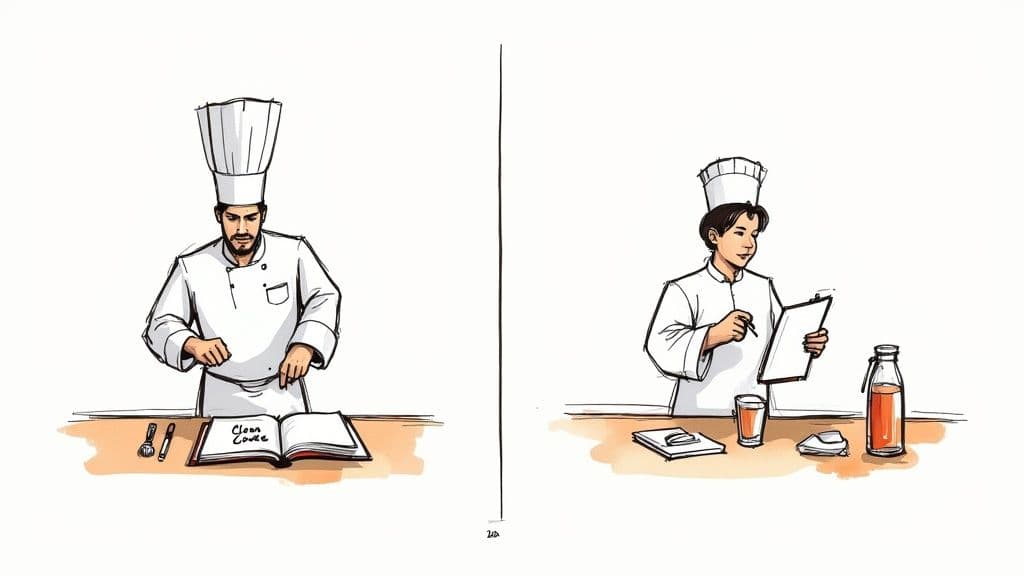
The Tactical Guide to Code
Clean Code: A Handbook of Agile Software Craftsmanship dives into naming, decomposition, tests, and smells—practical advice you can apply to every function and class. It’s about producing code that future engineers (and you) can understand and change easily.
The Strategic Guide to Professionalism
The Clean Coder: A Code of Conduct for Professional Programmers focuses on professional conduct: how you estimate, say no to unreasonable demands, own mistakes, and manage time and attention. Mastering these soft skills makes a developer someone teams can rely on.
Clean Code vs The Clean Coder — Key Focus Areas
| Aspect | Clean Code (Practice) | The Clean Coder (Professional) |
|---|---|---|
| Primary Focus | The quality and structure of source code. | The behaviour, ethics, and discipline of the developer. |
| Key Questions | How do I write maintainable code? | How do I act like a professional? |
| Core Topics | Naming, functions, comments, error handling, unit tests, code smells. | Time management, estimation, saying “no,” managing pressure, collaboration. |
| Metaphor | The chef’s recipe book. | The restaurant owner’s manual. |
| Outcome | Cleaner, more robust code. | A dependable, trusted team member. |
Both sets of ideas reinforce each other: writing clean code is a professional act, and professionalism expects clean code.
Core Disciplines of a Professional Developer
Strip away frameworks and architecture, and what remains are habits and mindsets: responsibility, honesty, continuous learning, and the discipline to build for the long term. Those habits separate a software craftsperson from someone who simply produces lines of code.
The Power of Saying No
Learning to say “no” professionally protects projects from unrealistic timelines. Saying yes to impossible deadlines is a form of deception. Professionals offer honest alternatives: realistic timelines, phased deliveries, or reduced scope.
Taking Absolute Responsibility
When a bug appears in code you wrote, own it. A professional apologizes, fixes the issue, and adds safeguards to prevent recurrence. This ownership builds trust faster than any explanation that shifts blame.
This principle also applies to career development: professionals study, practice, and sharpen their skills proactively instead of waiting for permission or training budgets.
Test-Driven Development as Design Practice
Test-Driven Development reframes testing as a design practice. The Red–Green–Refactor cycle encourages you to define small behaviors with tests, implement the simplest solution, and then refactor into a clean design. TDD promotes loosely coupled, cohesive code and helps prevent regressions.4
Building a Clean Coder Culture in Your Team
Individual discipline matters, but culture multiplies impact. A team-wide commitment to craftsmanship turns small habits into systemic quality.
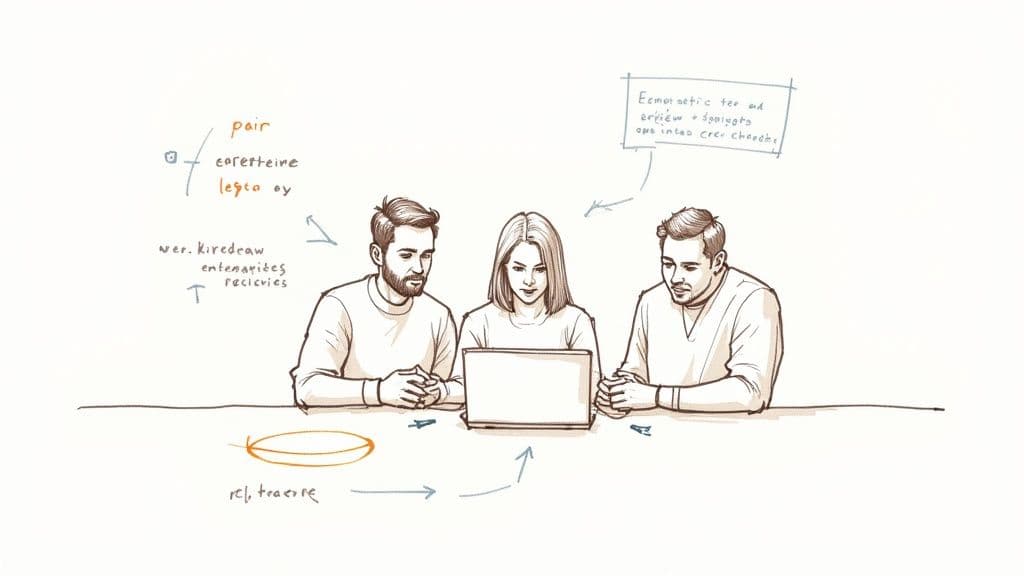
This cultural shift is built on repeated actions that prove value: better code reviews, regular refactoring, and process changes that reward quality.
Foster Empathetic and Rigorous Code Reviews
Make code reviews a learning opportunity rather than a blame session. Focus review comments on clarity and intent: could this variable be named better? Does this function express its purpose? Empathetic, rigorous reviews help spread standards and reduce defects. Industry reports highlight code review as a key practice for catching issues early and improving maintainability.5
Make Refactoring a Habit
Adopt the Boy Scout Rule: always leave the codebase cleaner than you found it. Small refactors—renaming a variable, extracting a method, adding a test—compound into major improvements over time. Regular refactoring keeps technical debt manageable and helps teams maintain delivery speed.
Implement High-Impact Process Changes
Consider three practical process changes to reinforce a Clean Coder culture:
- Pair programming sessions to transfer knowledge and enforce standards in real time.
- Share probabilistic estimates instead of single-point estimates: communicate ranges and uncertainties honestly.
- Enforce a team-wide style guide and automated linters (for example, ESLint) and quality tools like SonarQube to remove style debates from code reviews and focus on deeper design concerns.6
These shifts align daily work with professional standards and help new team members ramp up faster.
Navigating Common Pitfalls and Misconceptions
The Clean Coder journey isn’t a checklist; it’s practice. Beware of traps that turn good ideas into dogma or excuses.
“We Don’t Have Time for This!”
Clean work may take longer up front, but it pays back later through fewer bugs and faster feature work. Frame clean-up as an investment: an hour spent now can save days of debugging and rework.
The Reality of Legacy Code
Legacy code can be daunting, but rewrites are rarely the answer. Chip away at trouble spots with targeted improvements and small tests. Apply the Boy Scout Rule every time you touch the code and you’ll gradually transform the base without risking delivery.
Avoiding Clean-Code Dogma
Treat principles as heuristics, not scripture. The goal is clarity and maintainability—sometimes that means deviating from a rule when it makes the code clearer. Professional judgment matters.
So, What’s Next on Your Path to Craftsmanship?
Turn inspiration into steady habits. Read The Clean Coder and Clean Code, then start with small, repeatable actions:
- Spend 20 minutes a week cleaning a small piece of code.
- Run a quality tool like SonarQube on a side project to get automated feedback.6
- Propose a one-hour workshop on a single TDD concept.
Craftsmanship compounds over years. Small, consistent improvements create resilient systems and a rewarding career.
Frequently Asked Questions
What’s the single most important lesson?
Professionalism is responsibility. Take ownership of your estimates, your mistakes, and the quality of your work.
Are Uncle Bob’s principles still relevant?
Yes. They focus on conduct, ethics, and enduring design ideas that apply across languages and frameworks. The ideas endure because they address human and technical realities, not a specific toolset.1
How do I convince my manager to invest in clean code?
Translate technical debt into business impact. Propose a small pilot and back it with data about bug rates, time spent on rework, or customer impact. Offer measurable outcomes and a short timeline for validation.
Quick Q&A — Common User Questions
Q: How do I start practicing the Clean Coder mindset on my own?
A: Begin with ownership—write a failing test, fix a bug you didn’t create, and spend 20 minutes tidying a small function. Small, consistent actions matter more than grand plans.
Q: What process change gives the best ROI for quality?
A: Improve code reviews to be more empathetic and focused on clarity. Paired with automated linters and quality tools, this reduces defects quickly and spreads standards across the team.56
Q: How do I handle pressure to ship fast while keeping standards?
A: Communicate realistic estimates that include uncertainty, offer phased deliveries, and push back with alternatives when timelines are impossible. Professionalism means protecting the product and the team.
Actionable Q&A — Three Concise Steps
Q1: What should I do this week to act like a Clean Coder?
A1: Spend 20 minutes refactoring a confusing function and add or improve one unit test.
Q2: How can my team start improving culture next sprint?
A2: Run a short code-review workshop, adopt one linter rule, and agree to one refactoring task per story.
Q3: Which tool should I add first to measure improvement?
A3: Start with a quality scanner like SonarQube and run it on a small project to gather baseline metrics.6
1.
Robert C. Martin profile and contributions: https://en.wikipedia.org/wiki/Robert_C._Martin
2.
Agile Manifesto, 2001. https://agilemanifesto.org/
3.
Knight Capital Group trading glitch, 2012; company lost about $440 million due to a software error: https://en.wikipedia.org/wiki/Knight_Capital_Group#2012_trading_glitch
4.
Test-driven development overview and practices: https://en.wikipedia.org/wiki/Test-driven_development
5.
State of code review and its benefits; industry reports on review practices: https://smartbear.com/learn/code-review/state-of-code-review/
6.
SonarSource — SonarQube, static analysis and technical debt management: https://www.sonarsource.com/products/sonarqube/
🙋🏻♂️
AI writes code.You make it last.
In the age of AI acceleration, clean code isn’t just good practice — it’s the difference between systems that scale and codebases that collapse under their own weight.