A concise, practical guide to Robert C. Martin’s Clean Code and SOLID principles. Learn why clarity and craftsmanship matter and how to apply these ideas in modern stacks to build maintainable, testable software.
November 5, 2025 (9mo ago) — last updated June 23, 2026 (2mo ago)
Clean Code & SOLID Principles | Uncle Bob’s Guide
Practical guide to Robert C. Martin’s Clean Code and SOLID principles for building maintainable, testable software in modern stacks.
← Back to blog
Clean Code & SOLID Principles | Uncle Bob’s Guide
A practical guide to Robert C. Martin’s ideas on writing clear, maintainable code and applying SOLID principles in modern stacks. Learn what matters, why it lasts, and how to start improving your code today.
Who Is Robert C. Martin and Why It Matters

Robert C. Martin is a software engineer, author, and teacher with a career spanning five decades. Known to many as Uncle Bob, he helped shape the software craftsmanship movement and was one of the original signatories of the Agile Manifesto1. His guidance is practical and aimed at solving persistent challenges: managing complexity, keeping code maintainable, and enabling teams to collaborate effectively.
The context behind the guidance
Long before agile practices were mainstream, Martin advocated disciplined engineering approaches. That background makes Clean Code more than style advice — it’s part of a professional ethic for sustainable systems.
Why these ideas still matter
Languages and frameworks change, but complexity and maintainability are constant problems. Applying these principles yields long-term benefits:
- Long-term maintainability: less technical debt, easier changes.
- Better team collaboration: shared standards reduce friction.
- Improved developer velocity: well-structured code helps teams move faster over time.
Caring about Uncle Bob’s work is an investment in professional growth and code health.
The Philosophy of Clean Code
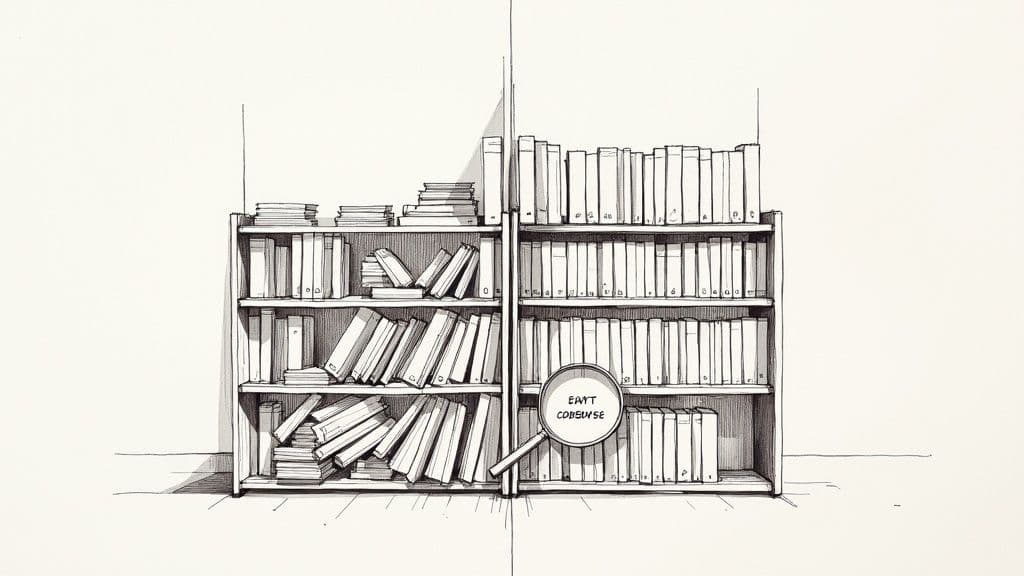
Clean Code is more than “code that works.” It’s code that’s readable, simple, and easy to change. Imagine a library where all books are neatly labeled and shelved; that’s the goal. When code is clear, developers can find and modify what they need quickly.
The practical reason for clarity
Developers spend a substantial share of their time reading and understanding code before they change it, which makes readability an economic advantage2. Messy code increases friction, slows projects, and causes costly bugs. Clean code is therefore a practical investment in speed and reliability.
“The only way to go fast is to go well.”
Core characteristics of clean code
- Meaningful names: variables and functions should communicate intent, e.g.,
elapsedTimeInDaysinstead ofd. - Small, focused functions: each function should do one job and do it clearly.
- Minimal, purposeful comments: comments should explain why, not what. Good code is mostly self-explanatory.
- Readability: code should read like a well-structured story.
Ignoring these principles leads to higher turnover, slower onboarding, and brittle systems. For practical examples and services, see Clean Code Guy and our blog.
A Practical Breakdown of the SOLID Principles
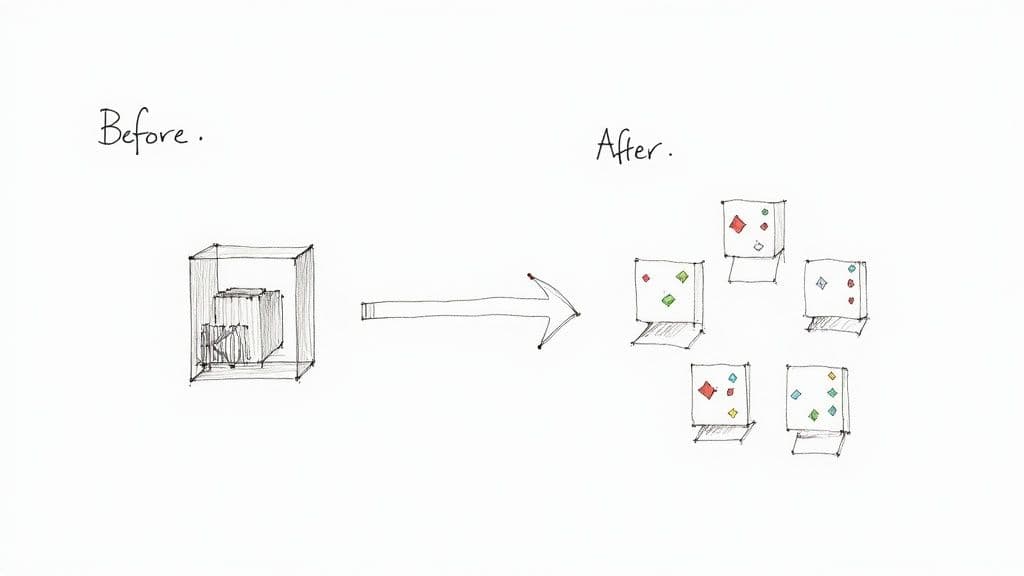
If Clean Code is the philosophy, SOLID gives tactical rules you can apply. These five principles help structure code to be flexible and resilient to change4.
Single Responsibility Principle (SRP)
A class or module should have one, and only one, reason to change. Treat reasons to change as stakeholder-driven. If a component handles data access, business rules, and presentation, split it.
Open/Closed Principle (OCP)
Software entities should be open for extension but closed for modification. Use extension points—interfaces or abstractions—so new features can be added without altering tested code.
Liskov Substitution Principle (LSP)
Subtypes must be substitutable for their base types. Violations create brittle code and conditional checks that defeat polymorphism.
Interface Segregation Principle (ISP)
Avoid “fat” interfaces. Split large interfaces into smaller ones so clients implement only what they need.
Dependency Inversion Principle (DIP)
Depend on abstractions, not concretions. High-level modules should not rely directly on low-level implementations; both should depend on interfaces. This improves testability and flexibility.
SOLID at a glance
| Principle | Core idea | Benefit |
|---|---|---|
| Single Responsibility | One reason to change | Maintainability |
| Open/Closed | Extend without modifying | Stability |
| Liskov Substitution | Subtypes behave like supertypes | Reliability |
| Interface Segregation | Small, focused interfaces | Decoupling |
| Dependency Inversion | Depend on abstractions | Flexibility and testability |
Embracing the Software Craftsmanship Mindset
Software craftsmanship means moving from “code that works” to “code done well.” It’s like building a handcrafted piece instead of a quick assembly. Craftsmanship requires pride in quality, precision, and longevity.
From coder to professional craftsman
Core behaviors include:
- Taking ownership: be accountable for delivered quality.
- Continuous learning: stay current and practice deliberately.
- Practising skills: use katas, side projects, and code reviews to improve.
Two practical practices central to this mindset are Test-Driven Development and continuous improvement.
Test-Driven Development (TDD)
TDD is a design practice where you write a failing test before production code, implement just enough to pass the test, then refactor. The red–green–refactor cycle produces more testable, maintainable code and gives teams confidence to change code safely3.
“The only way to go fast is to go well.”
Applying These Principles in a Modern Tech Stack
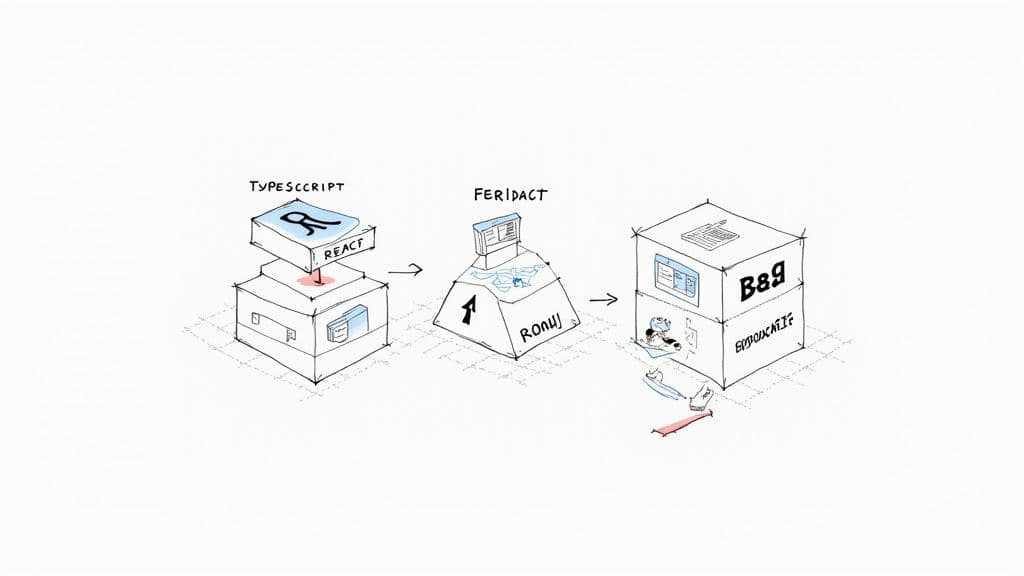
Martin’s principles are tool-agnostic. Whether you use React, TypeScript, Next.js, or serverless architectures, complexity and maintainability remain the core problems.
SOLID in React and TypeScript
- SRP: break large components into focused pieces and extract logic to hooks like
useUserData(). - OCP: use component composition and well-defined props to add features without changing core components.
- DIP: depend on interfaces or types so you can swap real services for mocks in tests.
AI coding assistants can speed up boilerplate, but they don’t replace architectural judgment. Use SOLID and Clean Code to curate AI output into a coherent, maintainable system.
Explore practical case studies and services at Clean Code Guy and our services page.
Common Questions About Robert C. Martin
Is Clean Code still relevant?
Yes. Managing complexity is timeless, and Clean Code offers a durable strategy for clarity and long-term maintainability. Projects built with these practices are easier to onboard and cheaper to maintain.
Are SOLID principles only for OOP?
No. The concepts are universal. SRP applies to functions, components, and serverless functions; DIP applies wherever you need decoupling for testability.
What is the single biggest takeaway?
Professionalism. Uncle Bob’s central message is that software development is a craft requiring discipline, accountability, and a commitment to quality.
Practical Advice — Common Developer Concerns
Q: How do I start applying these ideas without disrupting delivery?
A: Use the Boy Scout Rule: make small, incremental improvements as you work on features or bug fixes.
Q: Is TDD required to write clean code?
A: No, but TDD helps design for testability and reduces fear when refactoring.
Q: When should I refactor large parts of a codebase?
A: Prefer incremental refactors. A big-bang rewrite is risky; refactor continuously and add tests around changes.
Three concise Q&A developers ask
Q: How can I apply SOLID without rewriting everything?
A: Start with the modules you touch. Apply SRP and DIP, add tests, and refactor one responsibility at a time.
Q: Will Clean Code slow me down on tight deadlines?
A: Short-term pace may dip, but you’ll gain long-term velocity by reducing defects and easing future changes.
Q: What’s the fastest way to improve team code quality?
A: Agree on clear naming conventions, require small PRs with reviews, and adopt automated tests to catch regressions early.
1.
https://agilemanifesto.org/history.html — Agile Manifesto history and signatories, contextualizing Robert C. Martin’s role.
2.
https://www.jetbrains.com/lp/devecosystem-2021/ — JetBrains Developer Ecosystem report showing developers spend a substantial portion of their time reading and understanding code.
3.
https://en.wikipedia.org/wiki/Test-driven_development — Overview of Test-Driven Development and the red–green–refactor cycle.
4.
https://en.wikipedia.org/wiki/SOLID — Background on the SOLID principles and their role in software design.
🙋🏻♂️
AI writes code.You make it last.
In the age of AI acceleration, clean code isn’t just good practice — it’s the difference between systems that scale and codebases that collapse under their own weight.